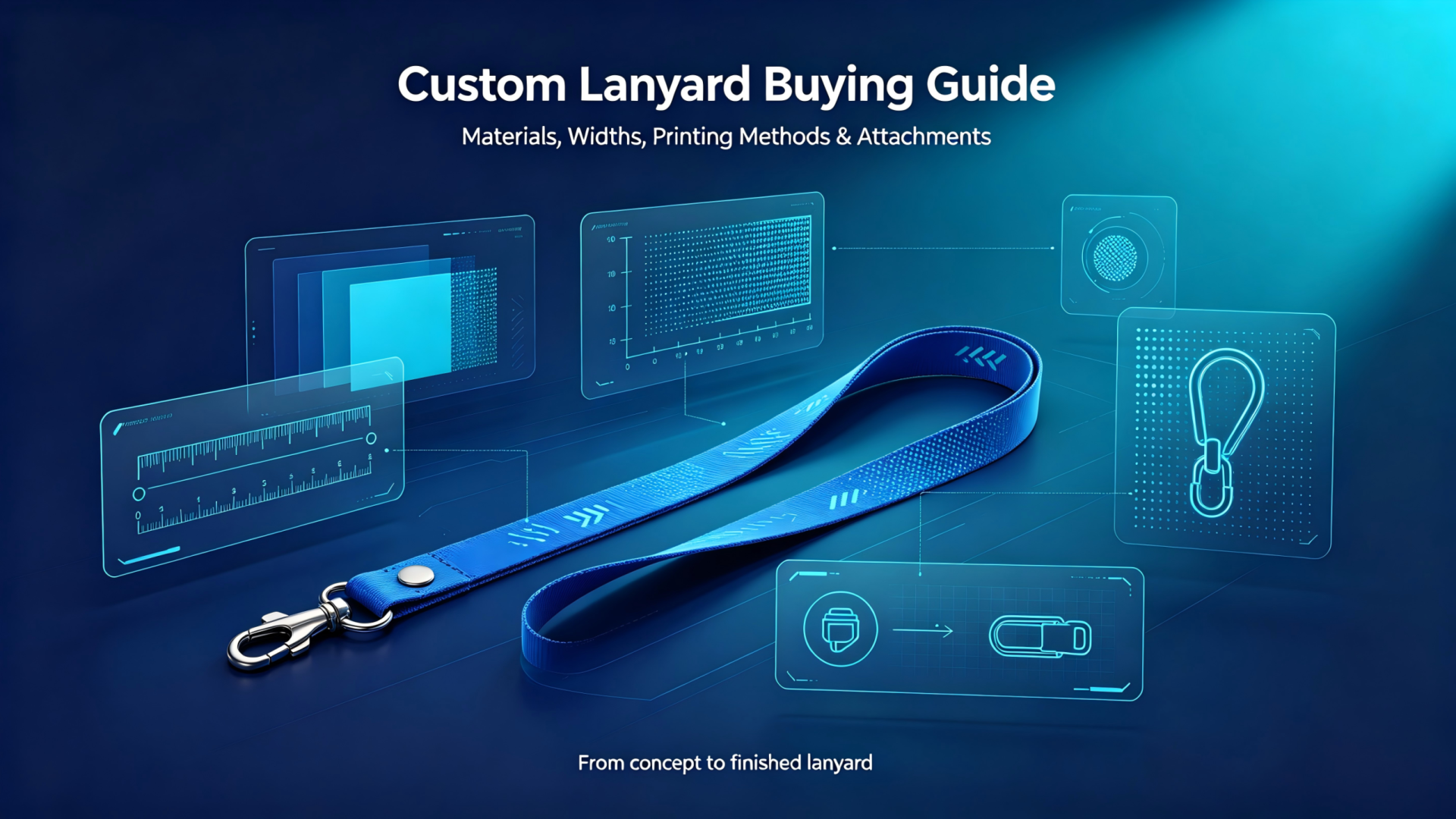
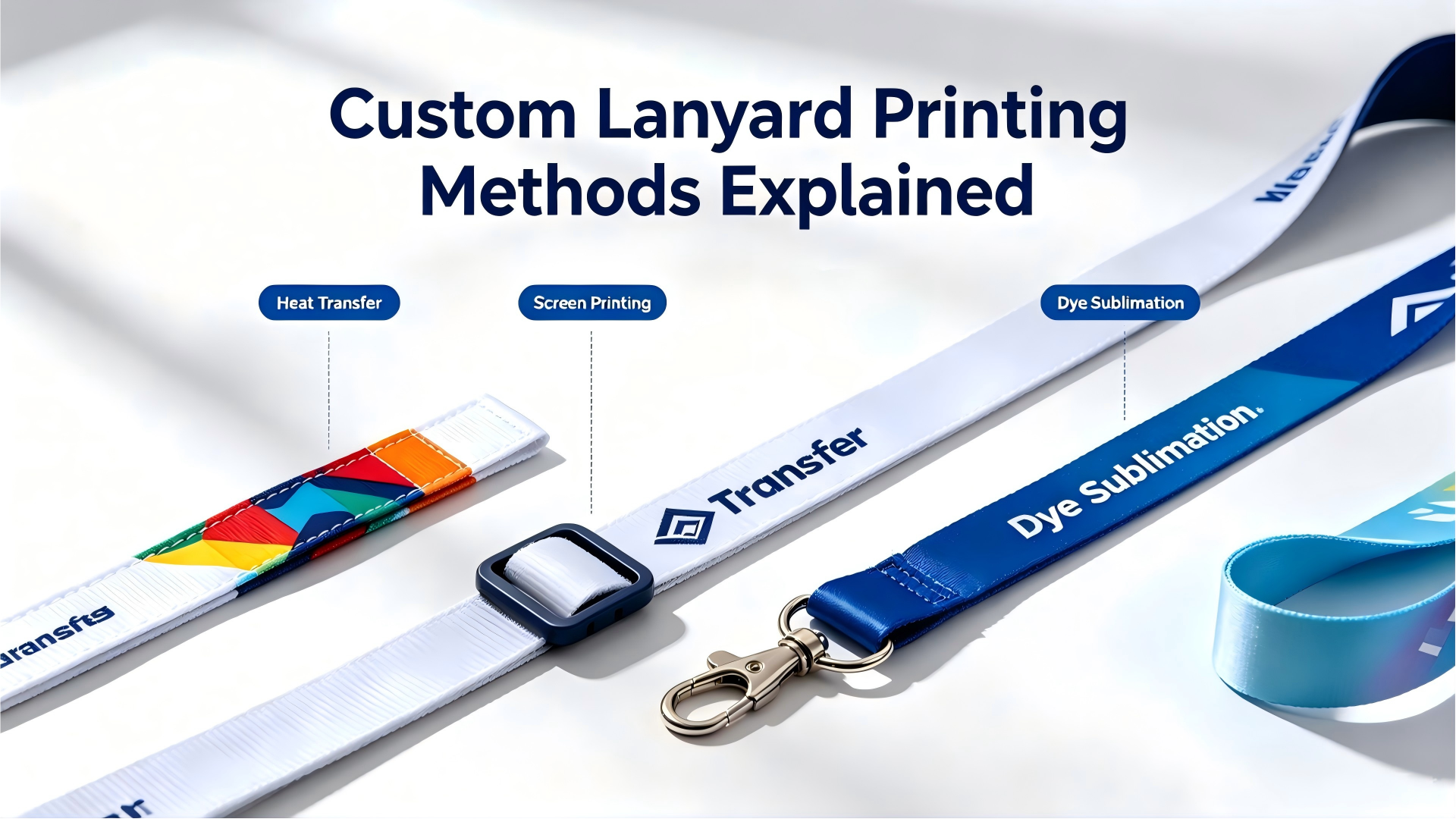
When ordering custom lanyards, choosing the right printing or customization method can have a significant impact on the appearance, durability, texture, and overall cost of the finished product.
Different designs require different production techniques. A simple logo may work well with screen printing, while a detailed full-color design may require dye sublimation. For customers looking for a textured and integrated design, jacquard weaving can be another option.
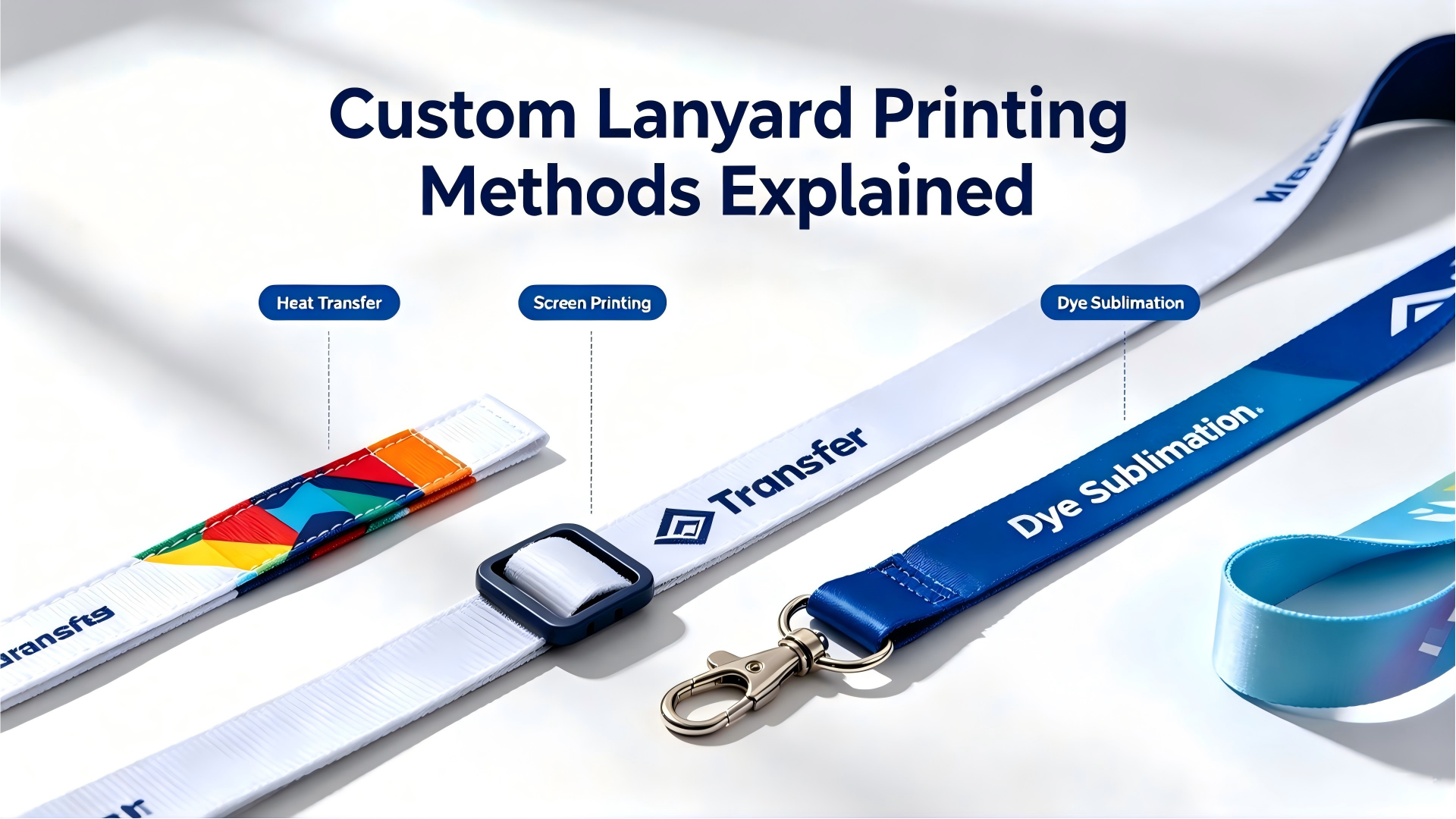
At Tianqiao, we work with several customization methods, including dye sublimation, heat transfer, screen printing, and jacquard weaving. Understanding the differences between these methods can help distributors, brands, and event organizers choose the right option for their projects.
1. Dye Sublimation Printing
Dye sublimation is one of the most versatile methods for producing detailed custom lanyards.
The design is first printed onto transfer paper and then transferred onto polyester webbing using controlled heat. The ink penetrates into the polyester fibers rather than simply sitting on the surface.
Best For
Dye sublimation is particularly suitable for:
Full-color designs
Photographic images
Gradients
Detailed logos
Multiple-color artwork
Designs that cover the entire surface of the lanyard
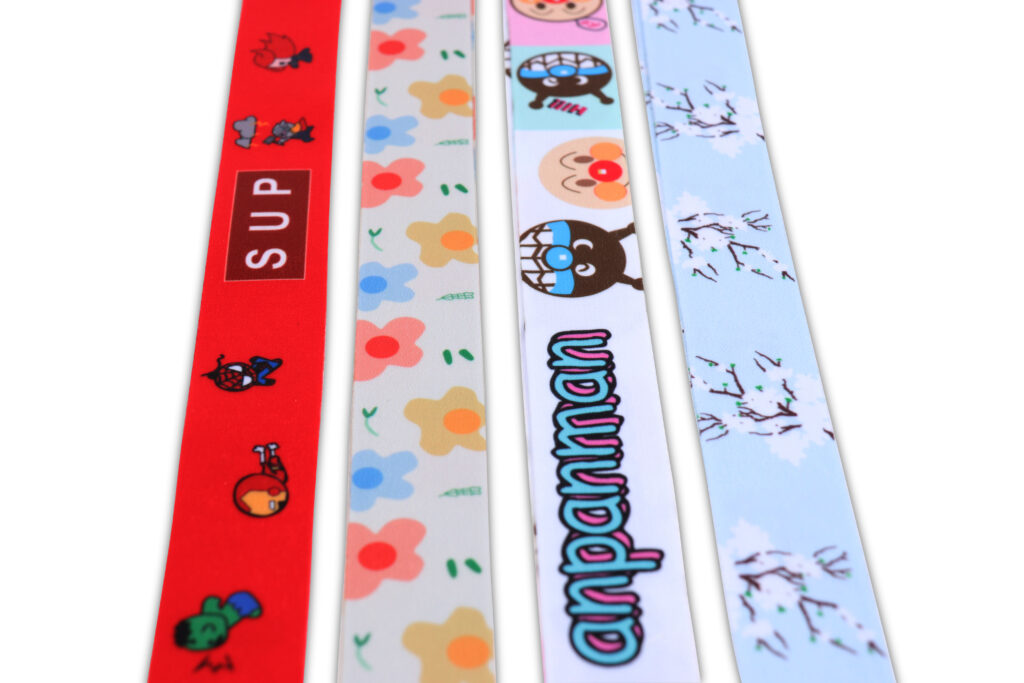
One of the main advantages of dye sublimation is its ability to reproduce complex artwork with smooth color transitions and fine details.
Because the ink becomes integrated into the polyester fibers, the finished surface remains relatively smooth without creating a thick printed layer.
Dye sublimation is commonly used for event lanyards, conference lanyards, sports events, festivals, exhibitions, and corporate branding.
2. Heat Transfer Printing
Heat transfer printing uses heat and pressure to apply a printed design onto the surface of the lanyard.
Unlike dye sublimation, the design remains more noticeably on the surface of the material. This makes heat transfer suitable for certain logos, text, and limited-color designs.
Best For
Heat transfer can be a practical choice for:
Simple logos
Text
Limited-color designs
Small production runs
Designs requiring a specific surface appearance
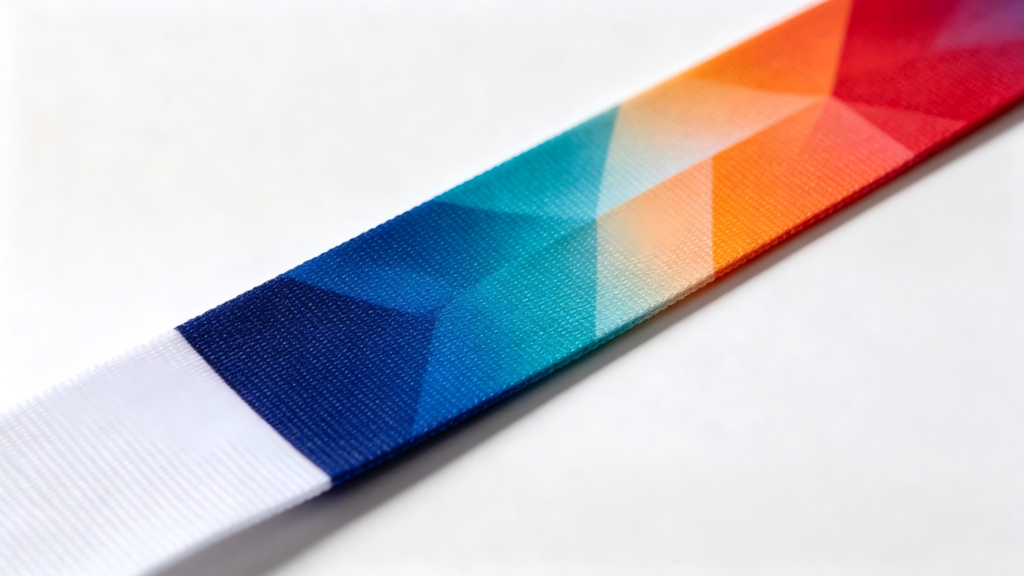
The final result depends on the transfer material, temperature, pressure, and production settings. Proper testing is therefore important before bulk production.
3. Screen Printing
Screen printing applies ink directly onto the surface of the webbing through a prepared screen.
It is particularly suitable for relatively simple artwork with solid colors and clear graphics.
Best For
Screen printing is commonly used for:
Simple logos
Text
One-color designs
Designs using a few solid colors
Bold graphic elements
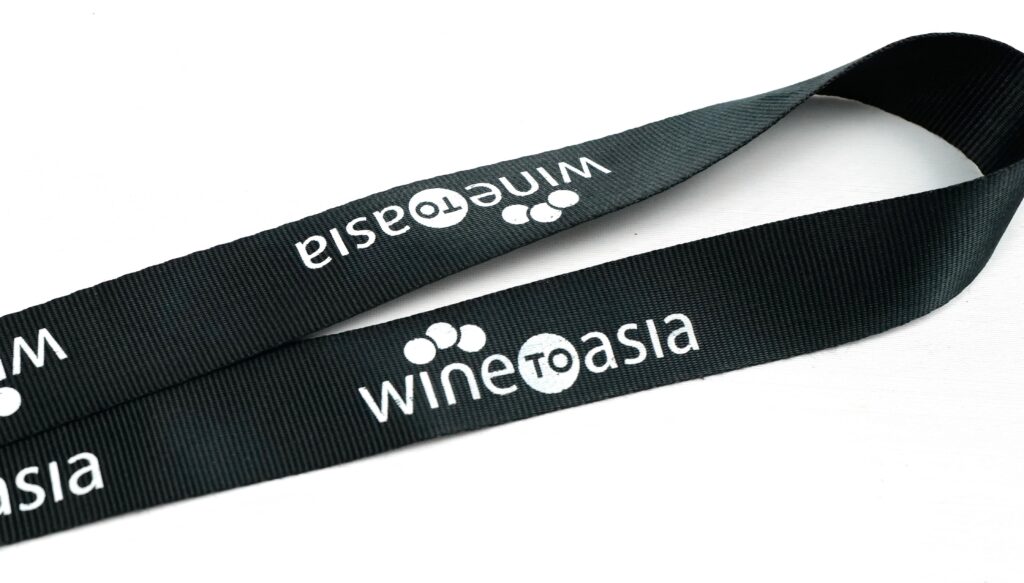
Screen printing can produce a strong and recognizable logo effect. However, it is generally less suitable for photographs, gradients, and highly detailed full-color artwork.
For projects requiring a simple and bold visual effect, screen printing can be an effective option.
4. Jacquard Weaving
Jacquard is different from the printing methods described above because the design is woven directly into the structure of the lanyard.
Instead of applying a design onto finished webbing, different yarns are arranged during the weaving process to create the pattern, logo, or text.
This creates a distinctive textured appearance and integrates the design into the fabric structure.
Best For
Jacquard weaving is suitable for:
Text and repeating patterns
Simple logos
Woven designs
Projects requiring a textured appearance
Applications where long-term durability is important
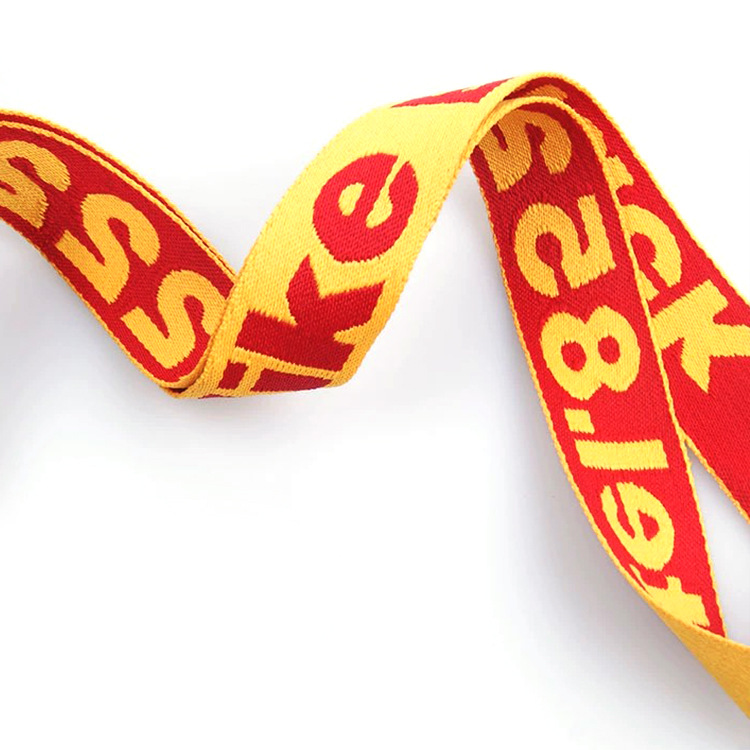
Jacquard lanyards can provide a more traditional textile appearance and are a good option when the customer wants the design to become part of the webbing itself.
How to Choose the Right Lanyard Printing Method
There is no single printing method that is best for every custom lanyard project.
The right choice depends on several factors, including the artwork, material, quantity, desired appearance, and intended use.
Consider Your Artwork
Start by looking at the design itself.
A simple logo with one or two solid colors may work well with screen printing or heat transfer. A design containing photographs, gradients, or multiple colors may be better suited to dye sublimation.
If the design is primarily text or a simple repeating pattern, jacquard weaving may also be an option.
Consider the Lanyard Material
The material and structure of the webbing can affect which customization method is most suitable.
Polyester webbing is commonly used for dye sublimation because the fibers can absorb sublimation dyes effectively. Other materials and webbing structures may require different production methods.
Consider the Intended Use
Think about how the lanyard will be used.
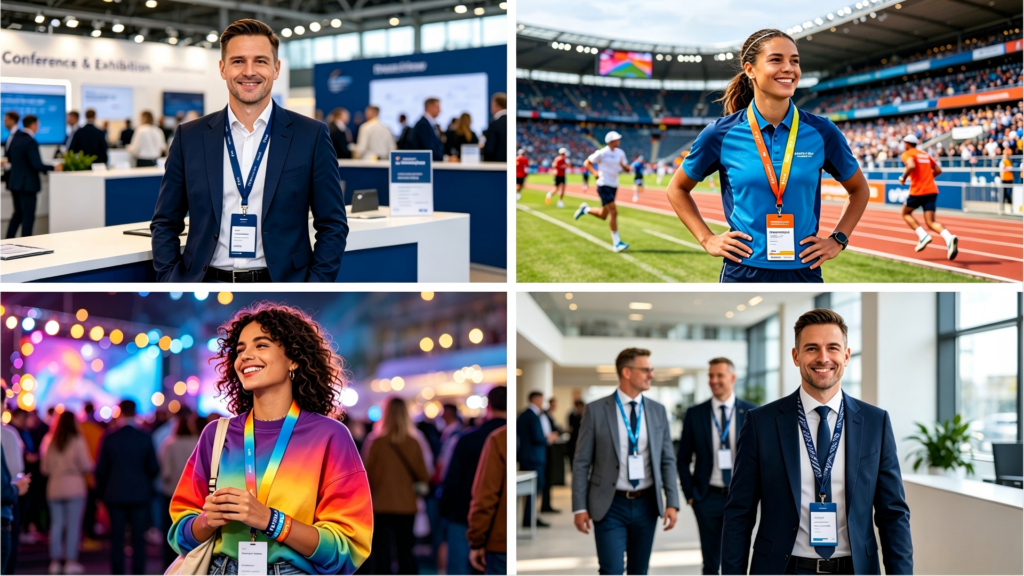
Lanyards for conferences, exhibitions, festivals, sports events, and corporate programs may have different requirements for appearance and durability.
A lanyard intended for frequent or long-term use may require a different customization approach from one designed for a short-term event.
Consider the Quantity
Production quantity can also influence the most practical production method.
Different printing and weaving processes have different setup requirements and production efficiencies. Discussing the quantity together with the artwork can help determine the most suitable solution.
Why an Approved Sample Matters
Choosing the right printing method is only one part of producing a successful custom lanyard.
An approved sample is an important step before bulk production because it gives both the customer and the production team a physical reference.
The sample can be used to confirm details such as:
Logo placement
Color appearance
Pattern
Webbing width
Printing quality
Texture
Attachment position
Once the sample is approved, it can be used as a reference by different production departments.
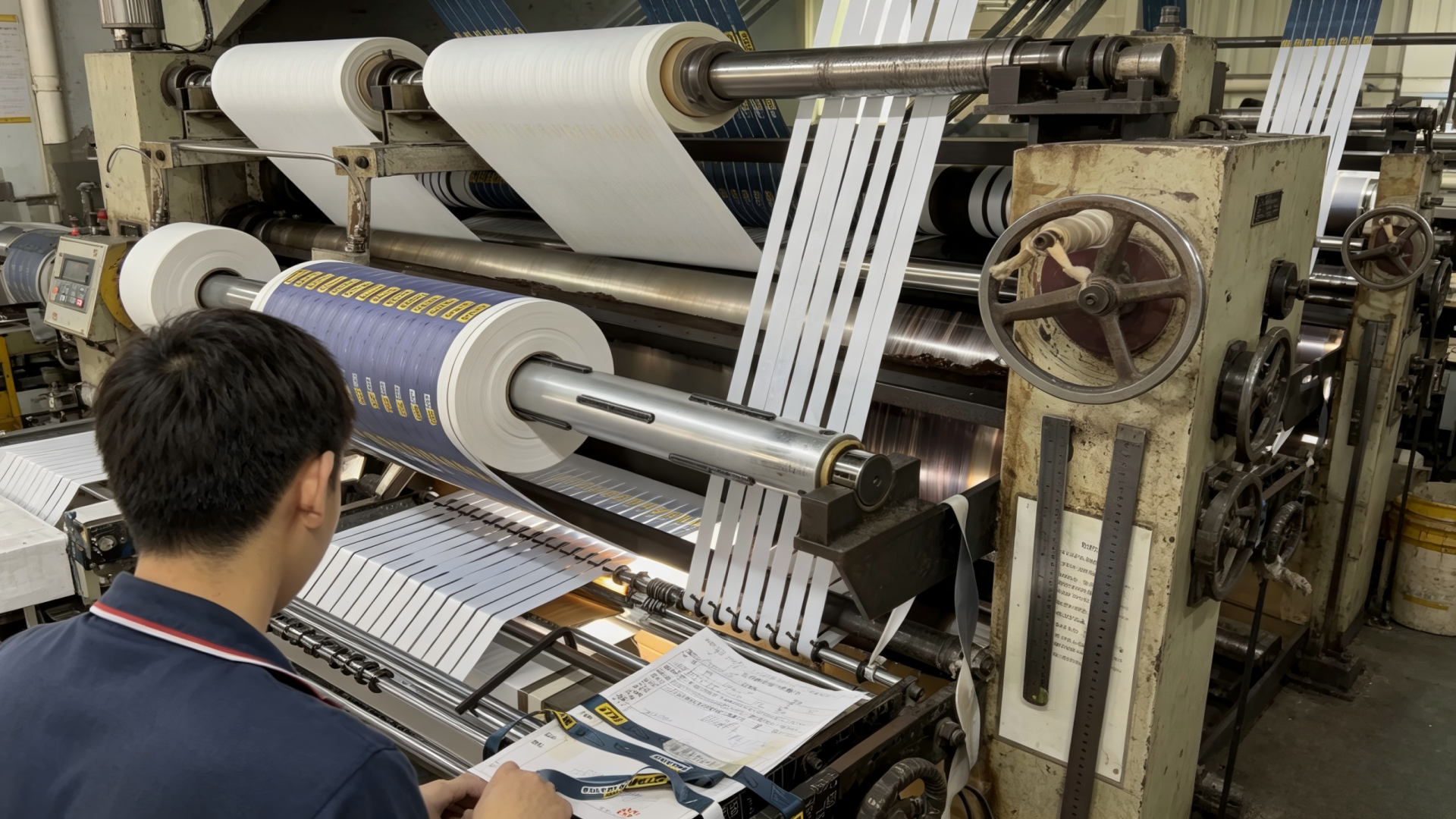
This helps keep pattern, weaving, printing, cutting, sewing, and finishing aligned with the approved specifications.
For custom products, small differences can affect the final appearance. Clear production references can therefore help reduce misunderstandings and maintain consistency throughout the manufacturing process.
Which Custom Lanyard Printing Method Is Right for You?
Each customization method has its own advantages.
Dye sublimation is a strong choice for detailed and full-color artwork. Heat transfer can be suitable for certain logos and limited-color designs. Screen printing works well for simple and bold graphics. Jacquard weaving provides an integrated woven design with a distinctive textile appearance.
The best option depends on the specific requirements of your project rather than simply choosing one method for every order.
Before placing a bulk order, it is always helpful to review the artwork, material, intended application, quantity, and desired appearance with your manufacturer.